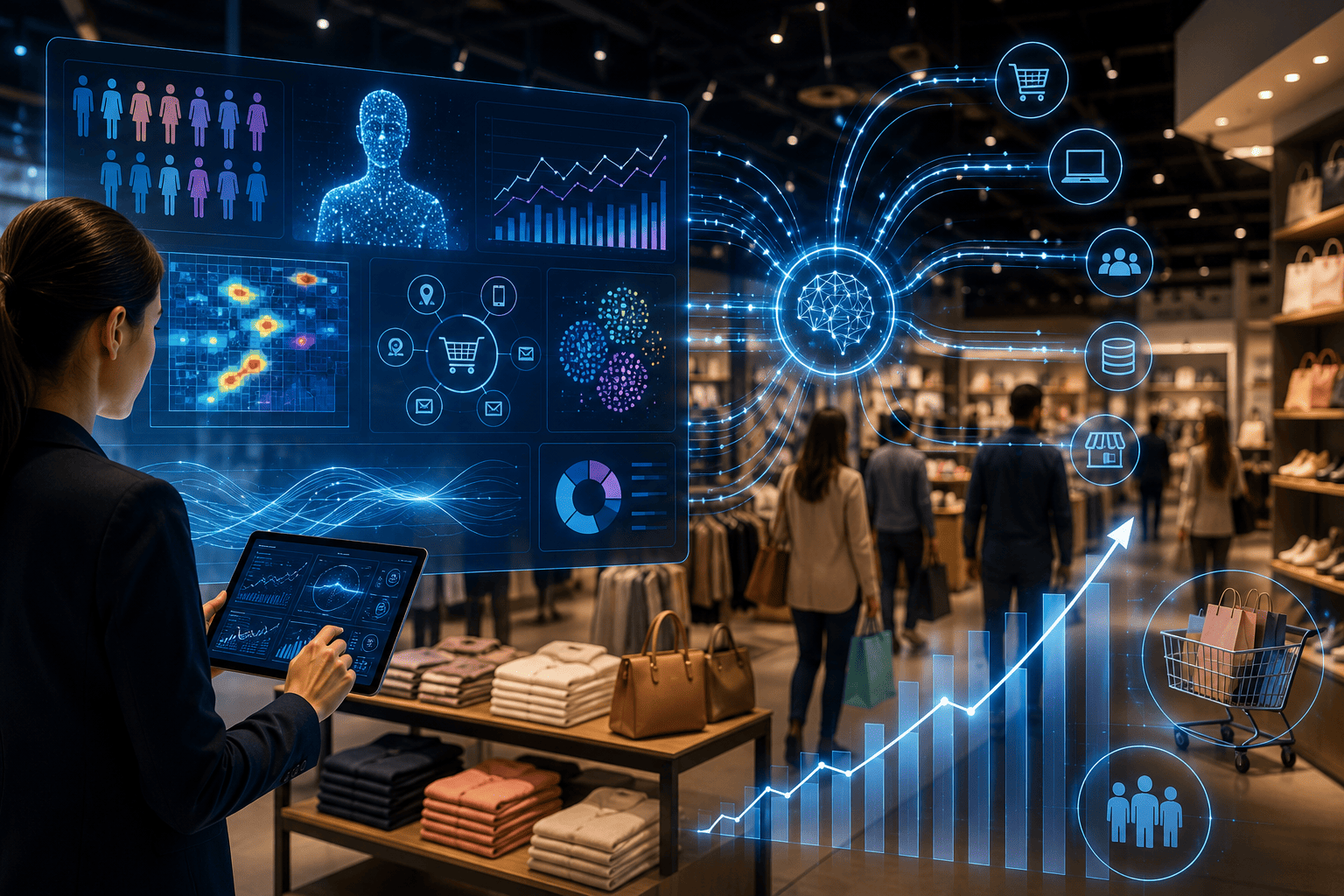
Every purchase tells a story, but the most valuable insights often come from the purchases customers haven’t made yet. Today’s retailers are no longer relying on intuition or historical sales reports alone. They are combining customer, transactional, and behavioral data with AI-powered intelligence to anticipate what shoppers want before they even search for it. This change is already proving beneficial: McKinsey has found that, with the help of AI prediction, lost sales due to stockouts of unavailable products can be reduced by up to 65%, which is evidence that predicting demand is no longer a nice-to-have — it’s a competitive advantage. Data Intelligence is transforming the retail landscape, spanning custom recommendations, real-time pricing, inventory optimization, and churn reduction. The question is no longer whether retailers should use predictive intelligence, but how effectively they can transform everyday customer data into decisions that improve experiences, strengthen loyalty, and drive measurable business growth.
What is Data Intelligence in Retail?
Retail data intelligence is the practice of converting huge amounts of customer and operational data into meaningful information that is used to make better business decisions. It is more than just a static report; it’s a panel that combines data from customers, Artificial Intelligence (AI), Machine Learning (ML), predictive analytics, and business intelligence. Data intelligence not only brings the information from a dashboard for the past quarter but also brings patterns you wouldn’t have noticed, predicts what you should do next, and suggests what you should do next—such as a personalized offer, stock up, or a nudge to prevent churn.
This is collected from every interaction that occurs with every customer in the digital world: POS systems, ecommerce platforms, CRM data, loyalty programs, website analytics, mobile applications, customer support, and social media interactions. These sources give a real-time view of customer intent. The return on investment is apparent: revenue growth of 5-15% can be seen by retailers who do use predictive analytics, whereas those who do not see only 0-3% growth, according to the Intellias report.
How Retailers Use Data Intelligence to Predict Customer Behaviour?
1. Personalized Product Recommendations
When a customer browses a few pairs of running shoes and skips straight past the formal wear, that’s not just browsing — it’s a signal. This is exactly what AI recommendation engines know how to do: they consider a person’s purchase history and browsing habits and use data from other similar customers to forecast what they may desire next. Rather than pre-programmed ‘bestseller’ slides, shoppers are shown products that really align with their intent, making it feel more shopping and less ‘understood’.
Its reward is quantifiable. Half of retail executives say personalized recommendations are a top priority in 2024 (Deloitte), and they claim that it has a positive impact on conversion rates and Average Order Value. In essence, personalization is no longer a desirable feature; it’s a means to generate revenue.
2. Predicting Customer Churn Before It Happens
It is more cost-efficient to keep an existing customer than to find a new one, which is why churn prediction has become a key capability for the retail sector. PwC’s Global Consumer Insights Pulse Survey found that 32 percent of consumers are giving up on a brand – after only one negative experience – and this makes proactive detection and resolution of disengagement crucial before a customer walks away. Data intelligence allows AI models to continuously observe behavioral indicators like fewer purchases, decreased website or app usage, multiple cart abandonments, fewer loyalty program interactions, and poor response to marketing campaigns.
For example, by identifying customers that are at risk, retailers can provide them with personalized incentives – such as exclusive offers, product recommendations, loyalty rewards, or timely re-engagement emails – before they leave. Such proactive measures foster customer loyalty, enhance the customer experience, and drive higher lifetime value.
3. Forecasting Future Demand
Predicting what customers will want next isn’t guesswork anymore — it’s pattern recognition at scale. Data intelligence systems weigh a mix of factors together: seasonality, upcoming promotions, regional buying trends, even weather patterns, alongside years of historical sales data, to anticipate demand for specific products in specific locations at specific times. A spike in umbrella sales before a forecasted storm, or a surge in winter coats as temperatures dip in one region but not another — these are the micro-signals AI catches that a spreadsheet never could.
The business impact shows up directly on the shelf and the balance sheet: fewer stockouts that send customers to competitors, less overstock tying up capital and warehouse space, and inventory planning that’s proactive rather than reactive.
4. Dynamic Pricing
Prices that never move are a missed opportunity in today’s retail landscape. AI-driven pricing engines constantly monitor competitor pricing, real-time demand, stock levels, and even market sentiment, making price changes bid-by-bid and even instant. The same principle as a hotel room that is more expensive on weekends or an airplane that gets more expensive as they fill up- now, on shelves and online stores.
The outcome is a pricing approach designed to preserve margins, while not being so high that it excludes customers, and to reduce prices when competition is the most important factor. It isn’t about looking for the cheapest; it’s about looking for the smartest, moment by moment.
5. Customer Segmentation Beyond Demographics
Age and gender were never enough — they’re easy to take in, but they often don’t tell you why someone buys what they buy. Data intelligence of the modern era categorizes customers according to their actual behaviour, such as their shopping habits, frequency of purchases, spending trends, brand loyalty, and preferred products. The loyalty-driven buyer and the budget shopper could have the same age, but different messages.
It’s this behavioural lens that enables hyper-personalized campaigns, offers, content, and recommendations that are tailored to how a person interacts with a brand – not what they are on paper. The result is ‘on-topic’ marketing, not recycled marketing.
Challenges Retailers Must Solve
Data intelligence is not a “plug and play” solution. Despite these advances, for many retailers, data silos persist, binding vital insights within siloed data structures and limiting the ability for even the most advanced AI models to work effectively, due to the quality of the data. Add the implementation of new privacy laws, new tools that need to be integrated with old retail systems, and the complexity of the challenge increases.
Trust is as important as the ability of algorithms and is growing in significance. Personalization is a consumer want, but only so long as they feel like they aren’t being monitored. The race to be compliant with data governance is now yielding to a more real and competitive advantage: responsible data governance, with its elements of transparency, security, and consent.
Turning Data into Decisions
The retailers winning today aren’t the ones with the most data — they’re the ones who understand it best. Data intelligence has transformed retail from a reactive business of guesswork into a proactive, customer-centric business by forecasting demand and avoiding churn. It’s not just about streamlining; it’s about cultivating trust and relevance that resonate with customers, driving repeat business.
Are you looking to transform your daily customer data into tangible growth?
Reach out to our data intelligence experts today to discuss your specific retail needs—and discover how to be proactive, not reactive, and finally be able to anticipate your customers’ next move.
Ready to turn your idea into a powerful digital solution?
Partner with our experts to design, build, and scale technology tailored to your business goals.
Contact us Today