AI-powered embedded systems are specialized computing units that are integrated into machines, appliances, and automobiles so that AI can be operated directly on the device. They can analyze data, find patterns, and make decisions instantly by using sensors and small AI models to process data locally. This method reduces dependency on cloud connectivity, increases responsiveness, and fortifies data security. Smart thermostats that adjust to user behavior, cameras that instantly check products, and automotive sensors that effectively help drivers are a few examples. According to Grand View Research, the global embedded AI market is expected to grow from its 2024 estimate of USD 9,966.3 million to USD 21,930.4 million by 2030.
How are these different from the traditional embedded systems?
Traditional embedded systems have strict resource budgets and are designed to execute predetermined, repeatable tasks. They respond to inputs, adhere to hard-coded rules, and hardly ever alter without being reprogrammed. AI-powered embedded systems add on-device machine learning and vision to embedded systems.
They take in sensor data, identify trends, and make decisions locally, allowing for quicker reactions, data retention on the device, and only important signals being sent to the cloud. For example, a traditional doorbell detects movement, whereas an AI doorbell can identify a person, differentiate a package, and gradually adjust to its surroundings.
Where is AI in embedded systems being used today?
- Healthcare: AI is being used by wearables and portable healthcare devices to track vital signs, identify abnormalities early, and even regulate medication delivery. On-device analysis of scans by medical imaging tools speeds up diagnosis while securing patient data.
- Automotive: AI-enabled embedded systems are essential for autonomous driving and predictive maintenance. They monitor driver behavior, power advanced driver assistance, and process camera and radar data in real-time.
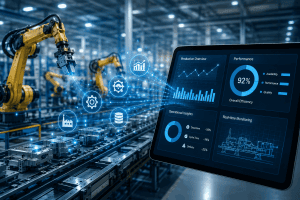
- Manufacturing: Artificial intelligence (AI) integrated into factory equipment detects flaws immediately, plans maintenance before malfunctions, and assists robots in learning new tasks, increasing productivity and decreasing downtime.
- Smart Homes and Consumer Devices: AI enables smart homes and consumer electronics, such as voice assistants and thermostats, to recognize user patterns, respond with customized messages, and function autonomously without continuous cloud connectivity.
- Retail and Supply Chains: Logistics systems forecast demand and improve delivery routes, while AI-powered cameras automatically track inventory, optimize store layouts, and quicken checkout.
- Agriculture and Energy: Drones and sensors powered by AI keep an eye on the weather, crops, and soil to maximize farming. Energy systems control power consumption, identify problems, and facilitate the integration of renewable energy sources.
What makes embedded AI systems a game-changer in real-world applications?
With AI in embedded systems, intelligence is placed where it matters. AI on-device reduces bandwidth consumption, makes decisions instantly, and stores sensitive data locally. By automating repetitive tasks, predicting failures, and learning and adapting, these systems lower costs and downtime. From smarter driver-assist features in cars to real-time quality checks on factory lines, the result is faster, safer, and more efficient operations. Hence, AI-driven embedded systems combine AI algorithms with the low-level functionality of embedded devices to provide efficiency, flexibility, and real-time decision-making.
What technologies enable AI in embedded systems?
AI on small devices is made possible by a few key technologies. TinyML and edge-AI frameworks let trained models run on microcontrollers. Fast math is generated without using a lot of power by energy-efficient AI chips and accelerators (NPUs, TPUs, and edge GPUs). Model optimization, or making models smaller and simpler, makes them fit into a limited amount of memory.
Real-time analytics and lightweight inference runtimes (such as TFLite Micro, ONNX Runtime, and TensorFlow Lite) enable local data processing on embedded devices. Sensitive data is protected by secure software and hardware. Finally, developing and debugging embedded AI solutions is accelerated by improved sensors, low-power connectivity (BLE, LoRa, 5G), and AI-assisted developer tools.
What are the biggest challenges ahead and strategies to overcome them?
When incorporating AI into embedded systems, both developers and companies encounter several difficulties. Complex AI models are challenging to run on small devices due to limited processing power, memory limitations, and high energy requirements. Ultra-low latency is necessary for real-time applications, such as industrial robots or driverless cars. Maintaining the security of sensitive data introduces another level of difficulty. Fragmented hardware and toolchains, a lack of expertise in AI-embedded development, and high development costs can all hinder its adoption.
Using methods like quantization, pruning, and TinyML, teams can employ lightweight, optimized AI models to overcome these challenges. Hardware accelerators that use less energy, like FPGAs, TPUs, or NPUs, increase performance. Secure boot, AI-powered anomaly detection, and encryption can all improve security. Using standardized runtimes, such as ONNX or TensorFlow Lite, guarantees device compatibility. The skills gap can be closed by funding training or collaborating with professionals, and beginning with small pilot projects permits safe experimentation and gradual scaling.
How do you see AI-powered embedded systems evolving over the next few years?
Anticipate a faster, smaller, and more pervasive growth in embedded AI. TinyML makes it possible for even the smallest devices to run intelligent models, while emerging chips and accelerators bring more computing power to the edge. More autonomy is granted to devices, which can adapt and learn from local data without depending on cloud processing.
As toolchains, runtimes, and standards develop further, deployment across a variety of hardware becomes easier. As secure-by-design techniques proliferate, security, privacy, and power efficiency improve. From pilot projects to widespread adoption, sectors like healthcare, automotive, and manufacturing transform embedded AI into reliable, real-time intelligence for commonplace devices.
To Conclude
As AI becomes a defining force in embedded systems, preparation today determines who leads tomorrow. When choosing scalable hardware and software platforms that can adapt to changing AI workloads, engineers and businesses should hone their skills in technologies like edge inference, neural network optimization, and TinyML. Integrating privacy, security, and power efficiency into designs from the start is equally important. By prioritizing these steps, teams can stay agile, competitive, and ready to meet the demands of an industry where AI-driven intelligence is no longer optional but necessary.