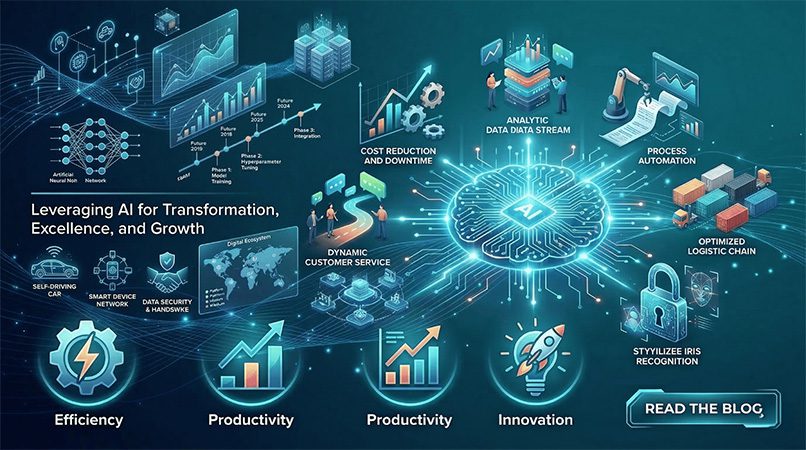
Artificial intelligence has become a core feature for most enterprise applications in the past couple of years. Gartner predicts that by the year 2026, 40% global enterprise applications will feature task-specific AI agents, which was less than 5% in the previous year.
From transforming operations, optimizing decision-making, and improving customer experiences, AI is put to use across industries. Traditional systems are struggling to keep up with the pace of modern business demands, especially with increasing competition, growing data volumes, and the pressure to innovate faster.
This is where AI development services play a critical role. But a run-of-the-mill AI system cannot adapt to business growth. And enterprises are enlisting specialized AI development services from top AI development companies to build custom AI-integrated products that fit their specific requirements. These services include building custom machine learning models, developing intelligent automation systems, implementing predictive analytics platforms, and integrating AI capabilities into enterprise-level applications.
AI development services can elevate business capabilities for multiple industries, including finance, healthcare, retail, manufacturing, and logistics. By adopting AI across their workflow, organizations can optimize operations and solve complex business problems that were previously difficult or expensive to address.
In this article, we are exploring the key business challenges enterprises are solving with AI development services and how they can drive measurable improvements in efficiency, productivity, and innovation.
The Growing Importance of AI Development Services in Enterprises
AI infrastructure spending alone surges to $1.75 trillion in 2026 (from $965B prior), fueled by AI-optimized servers up 49%. IDC forecasts 10x growth in AI agent usage by G2000 firms through 2027, starting strong in 2026 (Source).
Let’s explore some of the key reasons enterprises are increasingly investing in AI development services:
- Rising demand for automation and operational efficiency
- Growing complexity of enterprise data ecosystems
- Increasing competition in digital markets
- The need for faster and more accurate decision-making
- Customer expectations for personalized experiences
By deploying customized AI solutions, organizations can address long-standing operational challenges and create new growth opportunities.
Top 6 Business Challenges Enterprises Face
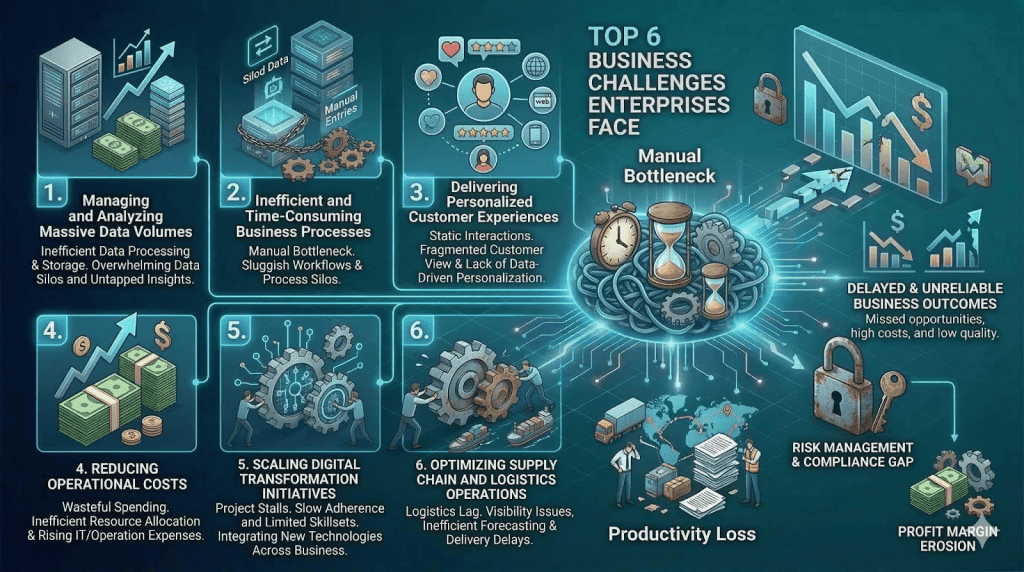
1. Managing and Analyzing Massive Data Volumes
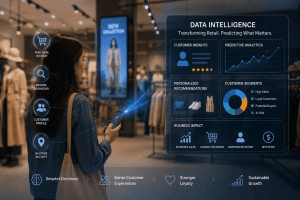
One of the most significant challenges modern businesses face is the management of the overwhelming amount of data they generate. Organizations collect massive amounts of information from multiple sources, including customer transaction & behavioural data, operational data, edge devices & machine data, and data from internal enterprise systems. It becomes extremely difficult to analyze and make sense of this data manually or even by using traditional data analytics tools. Most organizations struggle to convert these disjointed raw data into meaningful insights that can support business growth and decision-making.
The development and integration of advanced AI-powered data processing systems into operational workflows helps enterprises optimize their operation. These AI-integrated systems can analyze structured and unstructured data at scale, uncover patterns, and generate actionable insights in real time. Using machine learning and predictive analytics to analyse historical data, these systems uncover new profit channels, suggest best practices, and even craft business strategies.
For example, AI-powered data analytics can help businesses:
- Identify emerging market trends
- Detect anomalies in operational data
- Predict customer behavior
- Optimize pricing strategies
- Improve financial forecasting
By enabling faster and more accurate data analysis, AI allows organizations to make informed strategic decisions and respond quickly to changing market conditions.
2. Inefficient and Time-Consuming Business Processes
Even today, many enterprise processes still rely heavily on manual workflows that consume time and resources. Menial and repetitive tasks such as document processing, invoice management, data entry, compliance reporting, and operational monitoring were still overwhelmingly handled by human resources. This slowed down operations significantly and also increased the risk of incurring human errors.
AI development services enable organizations to implement intelligent workflow automation systems that streamline operations and reduce manual errors. By integrating artificial intelligence and process automation, enterprises can automate repetitive tasks while improving accuracy and efficiency.
Examples of AI-driven process automation include:
- Automated document classification and extraction
- Intelligent invoice processing systems
- Automated compliance monitoring
- Workflow optimization tools
By reducing reliance on manual processes, enterprises can improve productivity and allocate human resources to more strategic and managerial initiatives.
3. Delivering Personalized Customer Experiences
In recent years, customer expectations have changed dramatically. Modern consumers expect hyper-personalized experiences, relevant product & media recommendations, and responsive customer support across digital platforms.
However, delivering personalization at scale is exceedingly difficult and challenging for large enterprises that serve millions of users on a daily basis.
AI development services empower such organizations to implement intelligent personalization systems and recommendation engines that analyze customer behavior and preferences. These systems use machine learning algorithms to recommend products, content, and services tailored to each individual user.
AI-driven customer experience solutions include:
- Recommendation engines for e-commerce and media platforms
- Personalized content delivery systems
- AI-powered chatbots and virtual assistants
- Customer sentiment analysis tools
These solutions help organizations improve customer engagement, increase retention rates, reduce churn rate, and enhance brand loyalty.
4. Reducing Operational Costs
Operational overhead remains a major concern for enterprises across the globe. In every industry, inefficient processes, unidentified equipment downtime, and heavy reliance on manual operations can significantly increase expenses.
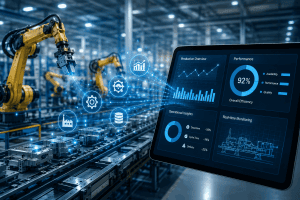
AI-powered automation and predictive systems help organizations optimize operations and reduce unnecessary costs. This is especially true for manufacturing and supply chain sectors, as factory floor work often involves untracked, inefficient tasks (like manual checks or fixes) that waste time and money.
Examples include:
- Predictive maintenance systems for industrial equipment
- Automated customer support solutions
- Intelligent energy management systems
- AI-driven resource allocation tools
By improving efficiency and reducing errors, AI enables enterprises to achieve sustainable cost savings.
5. Optimizing Supply Chain and Logistics Operations
As mentioned briefly earlier, supply chain management remains one of the most complex operational areas for large enterprises. Global supply chains involve multiple vendors & suppliers, transportation networks, inventory management systems, and demand forecasting processes. Operational disruptions such as delays, demand fluctuations, or inventory shortages can significantly impact business performance, revenue, and profit margins. AI development services help enterprises implement intelligent supply chain solutions that improve demand forecasting accuracy and operational efficiency.
AI-driven supply chain applications include:
- Demand forecasting using predictive analytics
- Inventory optimization models
- Logistics route optimization
- Supplier risk analysis
These technologies enable organizations to reduce operational costs, improve delivery times, and enhance supply chain resilience.
6. Scaling Digital Transformation Initiatives
Over the past few years, organizations have been undergoing large-scale digital transformation initiatives. However, integrating new technologies with existing legacy enterprise systems remains a bottleneck that can be complex and resource-intensive. AI development services can help enterprises modernize their pre-existing legacy systems while supporting scalable growth and innovation.
AI solutions can support digital transformation by:
- Integrating intelligent automation into existing workflows
- Building scalable AI platforms for enterprise data
- Enhancing enterprise applications with AI capabilities
- Supporting data-driven decision-making across departments
These capabilities enable organizations to accelerate innovation and remain competitive in the current market.
Why Should You Invest in AI Development Services?
Enterprises are increasingly recognizing that AI is not just a technology trend but a strategic investment that can drive long-term growth and efficiency. Manually scaling your business to meet industry demands has become a thing of the past. AI helps you grow your business without hiccups while meeting user expectations at every turn.
AI development services offer several key advantages:
- Custom solutions tailored to specific business needs
- Integration with existing legacy enterprise infrastructure
- Access to specialized AI expertise
- Faster development and deployment cycles
- Scalable AI architectures for future growth
By working with experienced AI development partners, enterprises can implement solutions that deliver measurable business value.
AI Development in the near future
The role of artificial intelligence in enterprise operations is expected to grow even further in the coming years. With emerging innovations such as AI agents, multimodal models, and responsible AI frameworks, the next generation of intelligent business systems is being shaped as we speak.
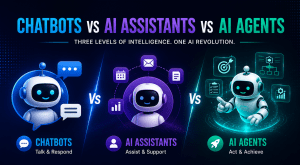
AI agents can perform complex tasks across enterprise workflows autonomously, while multimodal models can process and analyze multiple types of data, including text, images, audio, and video. These capabilities will allow organizations to build more advanced and context-aware AI solutions.
At the same time, businesses are placing greater emphasis on embracing responsible AI practices. As AI systems influence critical business decisions, enterprises must ensure transparency, fairness, and accountability in their algorithms. Ethical AI governance will become a key component of enterprise technology strategies.
To maximize the value of AI development services, organizations should follow several best practices. First, companies should assess their business needs carefully and identify areas where AI can deliver measurable value. Rather than adopting AI purely for experimentation, enterprises should focus on solving specific operational problems.
Second, selecting the right AI development partner is critical. Experienced AI development service providers can partner with you long-term to design scalable architectures, implement best practices, and accelerate deployment timelines.
Finally, enterprises should establish clear performance metrics and KPIs to measure the success of AI initiatives. Metrics such as operational efficiency improvements, cost reductions, and customer engagement levels can help evaluate long-term impact.
For organizations looking to remain competitive in the digital economy, the question is no longer whether to adopt AI but how quickly they can implement it effectively.
Ready to explore how AI can solve your business challenges?
Get in touch with our experienced team to learn more about AI development services.