2025 witnessed a wave of technology advancements across industries, driven by faster innovation cycles and increasing enterprise investment. Among these, AI stood out not just for technical progress, but for its commercial momentum. Even with ongoing concerns about an “AI bubble”, AI companies are scaling revenue 5 times faster than traditional SaaS models. This momentum is reflected across the top 10 technology trends for 2026, with sustained R&D efforts across the broader tech ecosystem. This signals a clear shift from experimentation toward real-world adoption and integration. The convergence of agentic AI, AI‑native software development, and next‑generation cloud architectures is pushing enterprises to rethink how systems are built, governed, and operated.
As we approach 2026, this convergence of innovation, investment, and maturity is reshaping how organisations think about technology. With 2026 just around the corner, we are exploring some of the top technology trends of the coming year.
Top 10 Tech Trend Predictions for 2026
- AI-Native Development Platforms
- Multiagent Systems
- Domain-Specific Language Models
- Preemptive Cybersecurity
- AI Security Platforms
- Confidential Computing
- Physical AI
- AI Supercomputing Platforms
- Digital Provenance
- Geopatriation
1. AI-Native Development Platforms
AI-Native development platforms are development environments that leverage artificial intelligence and machine learning capabilities across the software development lifecycle (SDLC). This improves the development, testing, deployment, and updation processes and enables faster iteration, better scalability, and deeper human-AI collaboration.
Key Characteristics:
- AI at the core: These platforms have a smart foundation model (LLMs or multimodal models), prompts for guiding the model behaviour, and AI-driven workflows as the core architectural elements, shaping how the platform is built, operated, and scaled.
- End-to-end AI tooling: Full cycle all-in-one system covering data ingestion, labelling, preprocessing, model training, evaluation, deployment, monitoring, and governance.
- Hybrid code generation and assistance: Can generate partial and boilerplate code, clean up code, conduct automated testing, etc. woith human review to accelerate development while maintaining quality.
- Decoupled yet cohesive data and model layers: System keeps data pipelines and AI model modular and separate yet tightly integrated to ensure consistency and reuse.
- Observability and governance: Explainability, bias monitoring, usage tracking, and security controls are embedded by design, enabling responsible and compliant AI operations.
2. Multiagent Systems
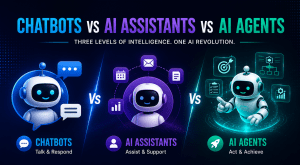
A multi-agent system is a network of AI agents who work together, with each agent having its own individual task responsibility. Companies have started experimenting with multi-agent systems in 2025, but in the coming year, these systems will have the capability to automate cross‑functional processes such as IT operations, customer service resolution, and supply‑chain coordination.
Key Characteristics:
- Agent Autonomy: Each of the AI agents within the network functions autonomously by processing the information independently and completing actions without external guidance.
- Localised Knowledge: Rather than having complete access to the global state, in a multi-agent system, each agent relies on partial localised knowledge, which is closer to real-life scenarios where there are disparate sources of data.
- Decentralisation: Decision-making power is distributed across agents, eliminating bottlenecks.
3. Domain-Specific Language Models
Domain-specific language models (DSLMs) are specialised AI models trained on specific datasets concerning a single industry or subject so as to generate accurate results. These models can act as an SME and understand domain-specific jargon better than a run-of-the-mill LLM like GPT. They are trained on highly specific, high-volume datasets from targeted industries. This inturn reduces hallucinations and improves adherence to regulatory compliance.
Key Characteristics:
- Targeted Training & Lexical Precision: These LMs are trained on a curated set of data, including expert texts, technical documents, and jargon-heavy text modules, so that they have an in-depth knowledge of industry-relevant terminologies.
- Reduced Hallucinations: By nicheing down the scope of training, these models generate fewer factual errors and invented details, producing reliable and accurate responses.
- Regulatory Compliance: These models support response generation that aligns with industry-specific compliance and regulatory standards through built-in filters that prevent disclosure of confidential data and bias mitigation. They support compliance with regulations like HIPAA in healthcare, GDPR, and the EU AI Act, thereby reducing legal and regulatory risk.
4. Preemptive Cybersecurity
Preemptive Cybersecurity is a critical technology trend that act as a preventive strategy that anticipates, detects, and neutralises cyber attacks before it executes and cause damage. This makes cybersecurity preemptive as opposed to reactive. AI threat detection algorithms are utilised to detect behavioural monitoring and phishing attempt patterns to disrupt cybersecurity breaches.
Key Characteristics:
- Proactive Detection: AI algorithms analyse historic attack data, recognise patterns, and detect network anomalies to accurately predict cybersecurity threats like malware and phishing campaigns.
- Automated Neutralisation: Responses are triggered instantly via orchestration platforms, including IP blacklisting, dynamic firewall rules, or sandbox isolation of suspicious processes, to handle high-volume threats.
- Deception Technologies: Using fake logins, decoy servers, or special trap tokens helps trick attackers into interacting with them instead of real systems. This allows teams to learn how attackers operate, keep real assets safe, and get alerts as soon as suspicious activity happens.
5. AI Security Platforms
These are platforms designed specifically to protect AI models, AI-integrated applications, and systems. They prevent threats such as training data poisoning, malicious or manipulative prompts that bypass safeguards, and unauthorised access or account hijacking.
They follow a two-pronged security approach:
- AI for security, where AI is used for anomaly detection, threat identification, and behavioural pattern monitoring
- Securing AI, which focuses on identifying and mitigating vulnerabilities in AI systems, such as data poisoning, prompt injection, and model manipulation
Key characteristics:
- Cybersecurity checks for AI: Scans LLMs and ML models for vulnerabilities prior to deployment, including model drift, poisoned datasets, adversarial weights, and other integrity risks.
- Usage control: Monitors prompts and AI usage to prevent data leaks, misuse, and the sharing of sensitive or personal information, enforcing enterprise security policies.
6. Confidential Computing
Confidential computing secures the privacy of your sensitive data while it’s actively being processed by encrypting it everywhere else but in the trusted execution environment (TEE). Data is maintained in a secure environment using hardware-isolated “secure vaults” inside processors while concealing it from cloud administrators, external users, and hackers.
Key Characteristics:
- Trusted Execution Environment (TEE): These are secure, hardware-isolated zones within CPUs/GPUs where code runs and data decrypts only for computation. These are shielded from OS, hypervisors, admins, or external attacks via memory encryption and access controls.
- Data and Code Integrity: Blocks tampering and unauthorised entities from altering data, code, or execution flow within the TEE, enforced by hardware checks and cryptographic hashing to detect modifications.
- Hardware Root of Trust: Embedded processor keys and firmware during manufacturing establish a tamper-resistant foundation, and boot-time measurements ensure a chain-of-trust from hardware up.
7. Physical AI
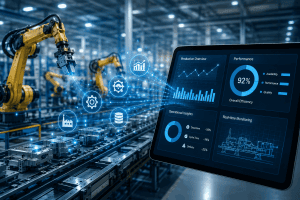
Physical AI brings AI to life by integrating it with hardware components like robots, sensors, etc., enabling them to perceive and react to real-life scenarios in real-time. Unlike the AI systems that we are familiar with that process texts and images, physical AI leverages computer vision and machine learning algorithms to sense its surrounding environment and take actions autonomously.
Key Characteristics:
- Embodiment & real-time perception: With physical AI, AI is stretching its operational realm beyond the screen. By embedding AI into a robot, vehicles, or any physical form, it can interact with a real-life environment, grasp objects, and navigate spaces. With cameras for vision, LiDAR for depth, and IMUs for motion, it can map out a space accurately, detect obstacles, and navigate efficiently.
- Autonomy: The system leverages AI agents to autonomously make decisions without humans initiating actions. They also continuously learn and adapt to their environment.
8. AI Supercomputing Platforms
AI supercomputers are high-performance computing systems used to train and run massive AI models. They overcome the processing speed limitations of ordinary computers. They utilise thousands of interconnected GPUs for their hardware, high-bandwidth networking, and AI-optimised orchestration software to attain a processing speed of trillions of computations in a fraction of a second.
Key characteristics:
- Massive Parallelism and Scale: Training is distributed across many GPUs working in parallel, interconnected by ultra-low-latency networks, delivering petaflops to exaflops of compute throughput to train trillion-parameter models efficiently.
- AI-Optimised Hardware: Custom accelerators leveraged for extreme throughput, transformer engines for attention mechanisms, and liquid/direct-to-chip cooling sustain peak performance 24/7 without thermal throttling.
- Integrated Software Stack: Combines optimised frameworks for model training and inference with orchestration systems that manage compute resources and workloads across distributed environments. These layers automate complex processes such as parallel training, fine-tuning, and model serving. Built-in fault tolerance and data management ensure reliability and consistency across large, multi-node deployments.
9. Digital Provenance
With AI content flooding the digital landscape, digital provenance gives an objective sense of authenticity by having a verifiable trajectory to digital assets. Similar to art provenance, digital provenance keeps a track record of the file’s ownership, transfer history, and any or all modifications. It uses metadata, cryptographic signatures, or blockchain to create an immutable audit trail, combating deepfakes, tampering, or misinformation.
Key Characteristics:
- Immutability & Tracking: Records have watermarks & cryptographic signatures to restrict tampering, blockchain or cryptographic hashes that block further edits, and full lifecycle audit trails with location, timestamps, and edit & transfer history data.
- Automation and Real-Time Updates: Automated tracking of access logs across platforms. C2PA standards automatically add a secure signature every time a file is changed. This update happens on its own and stays in sync across devices, so the file’s history remains accurate even when it’s shared on social media or stored in the cloud.
10. Geopatriation
Geopatriation is a term coined by the technology research and consulting firm Gartner, who predict that geopatriation amidst the Middle Eastern and European enterprises will shoot up from a mere 5% in 2025 to a significant 75% by 2030. Geopatriation is a data sovereignty strategy wherein organisations transfer data and applications from global public cloud infrastructures to local infrastructure that could be on-prem data centres, sovereign cloud environments, etc. This ensures data security and privacy amidst rising geopolitical crises by reducing dependency on foreign cloud infrastructures.
Key characteristics:
- Jurisdiction Alignment: Organizations can align their data security and privacy with the home country’s regulations, preventing extraterritorial access. Data stored cannot be requested, disclosed, or seized by foreign governments as it does not come under their jurisdiction.
- Gartner’s 4-step Risk Mitigation Strategy: Gartner’s four-tier geopatriation model outlines a step-by-step approach to reducing geopolitical risk by progressively increasing control over workloads: starting with reinforcing security through firewalls and local encryption, then redeploying applications within the same cloud provider, removing workloads to local sovereign cloud providers, and finally repatriating critical assets to on-premises data centres for maximum privacy and independence.
As these technology trends are rapidly progressing from their ideation stages to execution, their real impact will be defined not just by technology choices but by leadership vision. It is important that technology companies adapt to the changing tides to prioritise and adopt these innovations to give them a lasting competitive advantage.
Here’s what Mr. Baas Mannarasala, CEO of Travancore Analytics, had to say about this shift in technology trends and how it impacts business decisions at the leadership level.
“As we look ahead to 2026, it’s clear that technology is no longer just an enabler; it is a strategic multiplier. AI-native platforms, secure-by-design architectures, and sovereign data strategies are redefining how businesses scale, compete, and build trust with customers and regulators alike.
At Travancore Analytics, our focus has shifted from adopting isolated technologies to building resilient, future-ready systems that align innovation with accountability. We believe that investing early in these foundational capabilities will best position us to navigate uncertainty, unlock new value, and lead in an increasingly complex global landscape.”
Baas Mannarasala, CEO, Travancore Analytics
“From a technology standpoint, the coming year is about readiness, and this is a journey we have already begun. We are actively building AI-native systems, adopting multi-agent architectures, and strengthening secure AI infrastructure with a clear focus on modularity, observability, and continuous evolution. Our platforms are designed to adapt, with AI deeply embedded, automated governance, and the ability to scale securely without rework.
As a services-led organisation, our strongest investment has been and continues to be our people. We have already started enabling our engineers to work as AI-ready and AI-powered developers, using AI across the software lifecycle, from design and development to testing and operations. This is driving real improvements in productivity, quality, and delivery speed.
By combining these future-ready architectures with continuously upskilled teams, TA is strengthening its ability to adapt as technologies, regulations, and customer expectations evolve, while consistently delivering long-term value in an AI-first world.”
Anwer Sadath, CTO, Travancore Analytics
The trends outlined here reflect a clear shift toward systems that are intelligent by design, secure by default, and adaptable by necessity. With AI becoming a cornerstone in enterprise systems, it is critical that ethical AI practices be treated as a foundational requirement.
At Travancore Analytics (TA), we are committed to the idea that ethical use of AI is an integral part of how AI systems are designed, built, deployed, and governed. We strongly believe that for enterprises, success will depend on moving decisively from innovation and exploration to execution, guided by strong leadership and future-ready architectures. The next phase of technology evolution is already underway, and those who prepare now will shape what comes next.
Which technology trend do you think will define 2026?
Drop your thoughts in the comments below.