In 2025, the role of a U.S. CEO has evolved far beyond traditional leadership. You are no longer just steering vision and culture. You are navigating geopolitical uncertainty, AI-driven disruption, cyber risk, regulatory pressure, and a marketplace that moves at machine speed. In this environment, intuition alone is no longer a competitive advantage. The real differentiator is how quickly and accurately you can turn data into strategic decisions. This is why an AI assisted data intelligence platform is no longer a luxury. It is a necessity.
Many organizations still operate with fragmented dashboards, delayed reports, and disconnected systems. This creates blind spots at the executive level. When decisions are made on partial truth, even the best strategies can fail. AI data intelligence platforms change this reality by bringing clarity, context, and predictive power to the C-suite.
The Data Problem Most CEOs Underestimate
Most CEOs believe their organizations are data rich. In reality, they are poor. Data lives in CRM systems, ERP platforms, financial tools, spreadsheets, marketing analytics, and operational software. These sources rarely communicate with each other in meaningful ways. What reaches the CEO is often a filtered version of reality, shaped by manual reporting and time lags. This gap between raw data and real insight becomes dangerous in 2026. Markets shift overnight. Supply chains break without warning. Customers change behavior instantly. Without an AI data intelligence layer, leaders are reacting rather than leading. An AI data intelligence platform connects these silos and builds a unified strategic view. Instead of asking for reports, CEOs can see real time indicators, emerging risks, and growth opportunities in a single decision environment.
Why 2026 Demands a New Decision Model
The speed of business has fundamentally changed. Quarterly reviews are no longer enough. Annual planning cycles feel outdated before the first quarter ends. CEOs must shift from periodic decision making to continuous intelligence driven leadership.
In 2025, competitive advantage comes from three capabilities. First, the ability to sense change before it becomes visible to competitors. Second, the ability to simulate outcomes before committing resources. Third, the ability to align the entire organization around real time priorities. An AI data intelligence platform supports all three. It turns static reporting into dynamic strategy engines. CEOs gain the power to test scenarios, model risk, and explore opportunity without waiting for multiple departments to compile information.
-
From Reporting to Strategic Foresight
Traditional business intelligence tools focus on what happened. AI data intelligence focuses on what is about to happen and what you should do about it. This shift is critical. Retrospective dashboards are useful for reviews, but they do not protect you from future disruption. Predictive and prescriptive intelligence provides early warnings and strategic guidance. For a CEO, this means better capital allocation, smarter market entry decisions, more accurate demand planning, and stronger risk management. The board expects foresight. Your investors demand resilience. AI driven intelligence makes this possible at scale.
-
The CEO Advantage of Real Time Enterprise Visibility
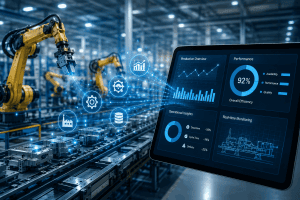
One of the most valuable outcomes of an AI data intelligence platform is real time enterprise visibility. This is not about micromanagement. It is about strategic awareness. When you can see operational performance, customer sentiment, financial health, and workforce dynamics in one place, you move from reactive leadership to proactive stewardship. In 2026, this level of visibility is not intrusive. It is expected. Regulators, investors, and partners increasingly expect transparency, traceability, and data backed governance. CEOs who operate without real time enterprise intelligence are exposed to avoidable risks.
Introducing DataLens as a Strategic Layer
This is where platforms like DataLens come into play naturally. DataLens is designed as an AI powered data intelligence layer that sits across your organization’s existing systems rather than replacing them. It connects with spreadsheets, legacy platforms, cloud applications, and departmental tools and transforms fragmented information into structured, decision ready intelligence.
For CEOs, the strength of DataLens lies in its strategic orientation. Instead of overwhelming leaders with technical complexity, it presents insights in business language. It supports scenario planning, pattern detection, and cross functional visibility without forcing organizations to rebuild their entire data architecture. DataLens allows leaders to extract intelligence from their existing data assets while preserving ownership and security. This aligns perfectly with the priorities of U.S. enterprises that must balance innovation with compliance and risk management.
In 2026, AI can no longer be relegated to IT or innovation labs. It has become a board level capability. Your board is not asking whether you are experimenting with AI. They are asking how AI is shaping your core strategy. An AI data intelligence platform positions the CEO at the center of this transformation. It makes AI a leadership tool rather than a technical experiment. When platforms like DataLens are implemented with executive sponsorship, they become part of the strategic operating system of the company. This reframes AI investments from cost centers to growth infrastructure. CEOs who understand this shift gain credibility with investors, boards, and global partners.
-
Risk Management in an Age of Compounding Uncertainty
Risk in 2026 is no longer linear. It is interconnected. A cyber event can become a reputational crisis. A supply chain delay can trigger regulatory scrutiny. A data breach can impact valuation overnight. AI data intelligence platforms help CEOs identify hidden correlations and systemic risk patterns that traditional systems miss. Instead of isolated risk reports, leaders gain an integrated risk intelligence layer. With an ideal platform like DataLens, executives can monitor risk exposure across operational, financial, and compliance domains in near real time. This transforms risk management from a defensive function into a strategic advantage.
-
Driving Enterprise Alignment at Scale
One of the most underestimated challenges CEOs face is organizational alignment. Strategy fails not because it is wrong but because it is poorly cascaded. When departments operate on different data sets and timelines, execution fractures. AI data intelligence platforms create a single source of strategic truth. They align leadership teams around shared metrics, shared priorities, and shared scenarios. DataLens supports this by allowing different stakeholders to interact with the same intelligence foundation while maintaining role based perspectives. This enables consistent decisions from the boardroom to the frontline.
The Economic Case for Intelligent Platforms
The business case for AI data intelligence is no longer speculative. In 2026, the economics are clear. Organizations using intelligent platforms experience reduced decision latency. They improve capital efficiency. They reduce waste in operations. They accelerate time to market. These are measurable financial outcomes, not theoretical promises.
For U.S. CEOs under pressure from shareholders, this matters deeply. Investing in an AI data intelligence platform is not about future proofing. It is about present day performance. Innovative platforms lower the cost of access to this value by reducing infrastructure complexity and accelerating time to insight. This makes transformation feasible not just for technology giants but for mid market and enterprise organizations alike.
Regulatory and Compliance Pressures Are Rising
The U.S. regulatory environment is becoming more data intensive. Audits are more sophisticated. Reporting requirements are more detailed. Cross border operations face increasing scrutiny. Manual compliance processes cannot scale in this environment. AI data intelligence platforms provide traceability, automated monitoring, and consistent documentation that support governance at the executive level. The data intelligence platform enables organizations to monitor compliance signals without disrupting business operations. For CEOs, this means fewer surprises and stronger control over reputational risk.
Customer Centric Strategy Requires Deeper Intelligence
Customer expectations in 2026 are shaped by personalization, speed, and trust. CEOs cannot rely on surface level metrics like churn or Net Promoter Score alone. They need behavioral intelligence, sentiment analysis, and intent modeling.
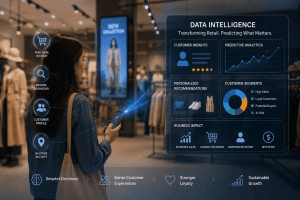
AI data intelligence platforms unify customer data across touchpoints and reveal patterns that drive loyalty and lifetime value. This allows CEOs to make strategic investments in experience, pricing, and product innovation with greater confidence. By integrating multiple data sources, data intelligence platforms provide a holistic view of customer reality. This elevates customer centricity from a slogan to an operational discipline.
The Leadership Shift Every CEO Must Embrace
The real transformation is not technological. It is leadership driven. CEOs must shift from being decision makers to becoming intelligence orchestrators. In 2026, your primary role is not to have all the answers. It is to ask better questions of your data and your intelligence systems. AI data intelligence platforms empower this shift. CEOs can interact with their business as a living system rather than a static organization. They move from reacting to reports to shaping outcomes in real time.
Why Waiting Is the Greatest Risk?
The biggest risk in 2026 is not implementing the wrong AI platform. It is maintaining the status quo. Competitors are already investing in intelligence driven leadership. Private equity firms are rebuilding portfolio companies around data intelligence. Boards are quietly benchmarking CEOs against their digital maturity. Choosing an AI data intelligence platform is no longer a technology decision. It is a leadership statement. It signals to your organization, investors, and market that you are prepared for the realities of modern enterprise leadership.
The CEO Mandate for 2026 and Beyond
U.S. CEOs in 2026 are defined by whether they lead with hindsight or with foresight. AI data intelligence platforms provide the infrastructure for foresight. They transform complexity into clarity. They convert data noise into strategic signals.
DataLens represents a new generation of this capability by making intelligence accessible, secure, and aligned to executive decision making. It enables CEOs to operate with confidence in a world defined by volatility and opportunity.
In 2026, the most successful CEOs will not be those with the boldest speeches or the biggest visions. They will be the ones who see clearly, decide quickly, and act with intelligence. An AI data intelligence platform is no longer optional for that future. It is foundational.