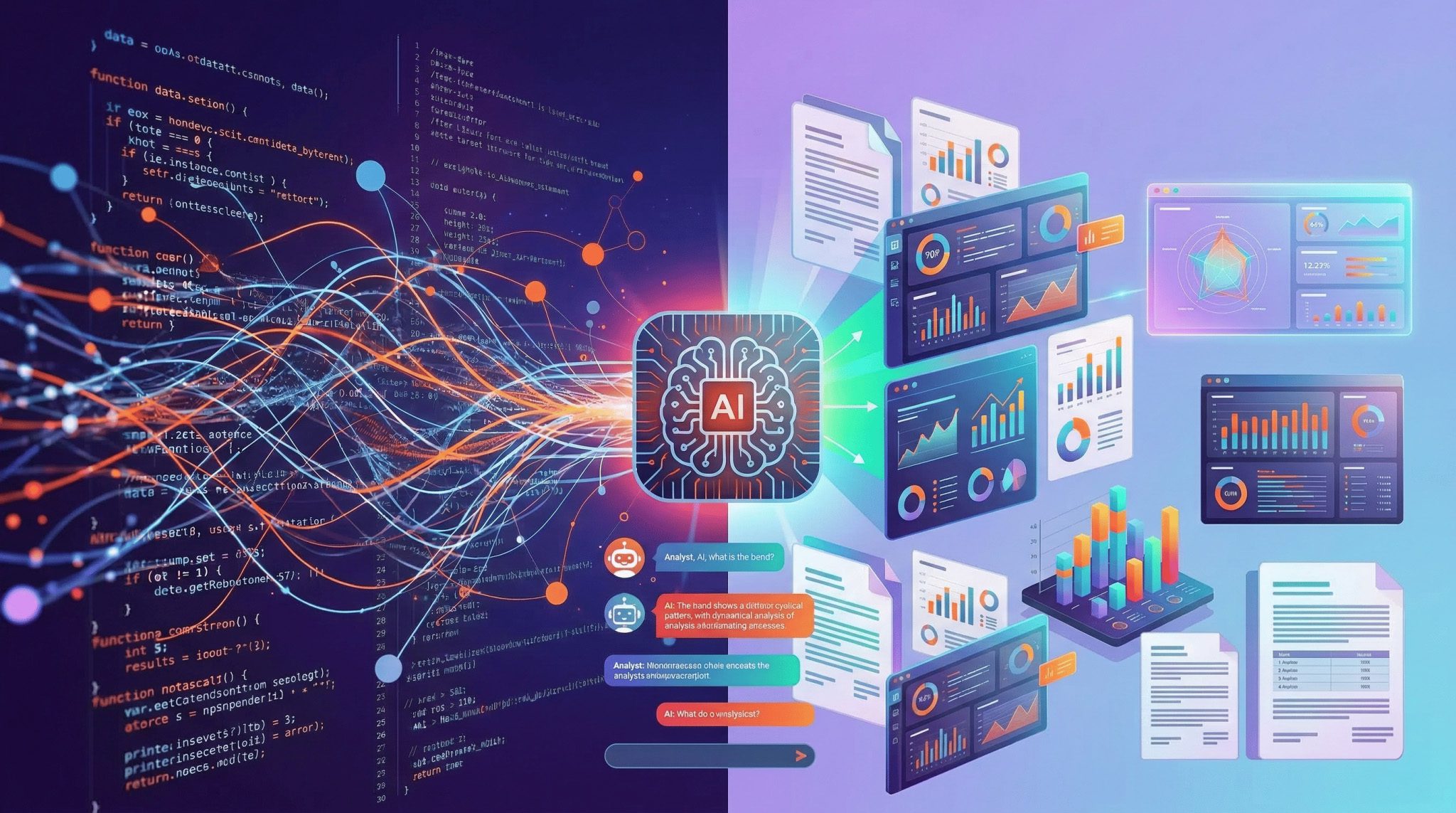
Enterprises generate data continuously from customer interactions, operational systems, IoT devices, financial transactions, marketing platforms, digital applications, and much more. Studies have revealed that, on average, a single enterprise pulls data from 400 data sources. With data privacy & security concerns on the rise, enterprises are opting to manage their data centrally in-house. The Result? Analytics and BI systems are fed with overwhelming amounts of data drawn from over 1000 data sources. While these data points have valuable insights buried in them, extracting meaningful information from them can be extremely challenging. Data analysts are burdened with spending hours hunched over their desks manually cleaning data, building dashboards, and interpreting results across varying contexts. These extracted insights are then utilized by decision makers to craft strategies that are outdated by the time the insights reach them. This process slows down business intelligence and limits the speed at which organizations can respond to market changes. This is where AI can intervene to simplify the process, expedite it, and remove manual errors. DataLens is a 360° data intelligence platform that combines artificial intelligence, machine learning, and advanced data analytics to automate analysis of complex data sets. DataLens generates intelligent reports that highlight patterns, trends, and actionable insights.
Let’s explore how DataLens uses AI (its multi-agentic AI framework) to generate detailed reports from complex datasets, the technologies behind it, and the value it brings to modern enterprises.
The Data Overload Problem
For enterprises, data is generated from multiple internal and external sources, including:
- Customer relationship management systems
- Marketing platforms
- Financial databases
- Supply chain systems
- IoT devices and sensors
- Web and mobile applications

These systems produce different types of structured and unstructured data. When combined, they create massive datasets that are difficult to analyze using traditional reporting tools and manual reporting. This creates unique challenges for organizations, including:
- Data silos
- Manual errors
- Delayed analysis
- Slow decision-making
- Difficulty identifying patterns
- Need for technical and analytical expertise
Traditional data analytics tools often require extensive manual configuration and technical expertise. As data volumes grow, businesses need smarter systems capable of automating analysis and delivering insights quickly.
‘DataLens addresses these challenges by introducing AI-powered intelligent reporting’
What is DataLens?
DataLens is an AI-assisted 360° data intelligence platform designed to transform raw enterprise data into actionable business insights. Instead of relying solely on time-consuming manual analysis, DataLens uses artificial intelligence to automatically interpret datasets, surface patterns, and generate detailed reports. The platform analyzes data from multiple enterprise data sources and applies machine learning algorithms to analyze this bulk of data in near real-time. It then produces easy-to-understand reports that highlight key insights, underlying patterns, anomalies, trends, and predictions.
In essence, DataLens acts as an intelligent data analyst that continuously analyzes business data and delivers insights in near real time. Here are the key features of DataLens, our 360° data intelligence platform:
- Automated data analysis
- AI-generated reports and summaries
- Predictive analytics
- Interactive AI chatbot
- Natural language explanations
- Near real-time analytics monitoring
- Scheduled Analytics
- Independent on-prem functionality
These features allow organizations to move from static reporting to dynamic, intelligent insights.
Contact for DataLens Demo
How DataLens Uses AI to Generate Smart Reports?
DataLens’s intelligent reporting capabilities run on a core multi-agentic AI framework. Several technologies work together to analyze datasets and generate meaningful insights automatically.
1. Multi-Source Data Connectivity
The first step in generating intelligent reports is collecting and consolidating data from multiple sources. DataLens can connect your Google Sheets, CSV file upload, or S3 with a CSV file. DataLens does not require access to your enterprise databases. Share only the required data or maintain DataLens fully on-prem for maximum data privacy and security.
2. Pattern Recognition and Insight Discovery
DataLens applies machine learning algorithms to identify underlying patterns and correlations. These algorithms analyze large datasets to uncover insights such as:
- Customer behavior trends
- Ideal Customer Profile
- Sales performance patterns
- Operational inefficiencies
- Seasonal demand fluctuations
- Financial anomalies
For example, DataLens might identify patterns such as a particular customer segment consistently increasing purchases during specific periods or that certain operational processes lead to delays in service delivery. Traditional analytical systems rely heavily on predefined queries. In contrast, DataLens uses AI to explore data autonomously and surface context-aware insights that analysts might not have initially considered.
3. Natural Language Report Generation
One of the most powerful features of DataLens is its ability to convert complex analytical results into detailed reports in business terminology. Using natural language processing and generative AI models, the platform automatically generates report summaries that explain key insights in natural language. Instead of presenting raw charts or tables, DataLens provides narrative explanations that highlight important trends and findings. DataLens also provides recommendations and points out data gaps that could improve context and insights. DataLens gives you reasoning-driven insights such as:
“Sales increased by 18% in Q4, driven primarily by higher demand in the Asia-Pacific region.”
“Customer churn rates have 12% reduction after the implementation of a new loyalty program.”
These AI-generated insights make analytics accessible to non-technical users, allowing executives and decision makers to quickly understand the implications in the context of their business.
4. Predictive Analytics and Forecasting
Beyond analyzing historical data, DataLens uses machine learning models to predict future trends and outcomes to give suggestions as ‘Next Steps’. Predictive analytics capabilities allow organizations to forecast key business metrics such as:
- Revenue growth
- Customer churn probability
- Product demand
- Operational risks
These ‘Next Steps’ are integrated directly into smart reports, enabling decision-makers to anticipate potential opportunities and challenges. For example, an intelligent report generated with DataLens might highlight that demand for a product is expected to increase significantly in the coming months, allowing supply chain teams to prepare accordingly.
5. Real-Time Reporting and Monitoring
Organizations need real-time insights to respond quickly to changing conditions. DataLens continuously analyzes incoming data streams and updates reports dynamically in near real-time. This allows enterprises to monitor performance metrics, operational indicators, and customer behavior in near real time. Near real-time reporting capabilities support:
- Sales monitoring
- Operational performance tracking
- Customer engagement analysis
- Risk detection and alerting
By providing up-to-date insights, DataLens enables organizations and their key decision makers to make timely and informed decisions.
Know More About DataLens
Benefits of AI-Powered Data Intelligence
The use of AI for data analytics offers several advantages over traditional analytics approaches.
- Faster Insights: Automated data analysis and reporting significantly reduce the time required to generate insights.
- Improved Accuracy: AI-powered data analysis and anomaly detection improve the reliability of results when compared to the results obtained from manual analytics and traditional analytical tools.
- Ease of use for Non-Technical Users: Natural language reports make complex data insights understandable for business leaders without technical backgrounds.
- Better Decision-Making: Predictive analytics helps organizations anticipate trends and make proactive decisions.
- Increased Operational Efficiency: Automated reporting reduces the workload of data analysts.
Real-World Applications of DataLens

DataLens is a truly industry-agnostic platform that could be applied across multiple industries to surface industry-relevant insights.
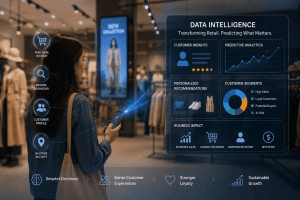
- Retail: Retail companies can analyze customer behavior, sales trends, and inventory performance to optimize pricing and marketing strategies.
- Finance: Financial institutions can monitor transaction data, detect fraud patterns, and generate regulatory compliance reports.
- Healthcare: Healthcare organizations can analyze patient data, staff shifts, bed availability, etc., to improve operational efficiency and clinical outcomes.
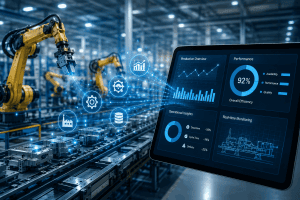
- Manufacturing: Manufacturers can monitor production data, equipment downtime, equipment performance issues, and predict maintenance requirements.
- Marketing: Marketing teams can evaluate campaign performance, customer engagement metrics, and audience segmentation insights.
Across industries, DataLens enables organizations to transform complex datasets into actionable intelligence.
How to Stay Ahead…!
Analyzing complex enterprise datasets is becoming increasingly challenging as data volumes grow and business environments become more dynamic. Traditional analytical platforms often struggle to keep pace with these demands. AI-powered data analytics platforms like DataLens are transforming how organizations approach analytics and reporting. By automating data integration, cleaning, analysis, and report generation, DataLens enables businesses to extract valuable insights from complex datasets quickly and efficiently.
Through intelligent pattern recognition, natural language reporting, predictive analytics, and real-time monitoring, DataLens helps organizations make better decisions and respond faster to market changes. As data continues to play a central role in business strategy, AI-powered smart reporting will become an essential capability for enterprises seeking to remain competitive in the digital economy.