Enterprises today are generating unprecedented volumes of data, creating a strong foundation for smarter, faster decision-making. When there are clear definitions, ownership, and quality standards in place, data is no longer just an operational byproduct; it becomes a strategic asset. Gartner estimates that poor data quality can cost businesses up to $12.9 million annually, which shows how important it is to get data right. Companies that invest in improving data quality and consistency can reduce inefficiencies and find measurable value. This proves that modern enterprises are increasingly using the data intelligence approach to combine metadata, governance, lineage, and observability to create a shared understanding of data. This is where data intelligence platforms come in: they turn raw data into strategic insights.
Grand View Research states that the global data intelligence and integration software market, which was worth $18.85 billion in 2024, will grow at a CAGR of 16.4% and be worth $71.74 billion by 2033.
Unlike traditional systems, data intelligence platforms combine AI and machine learning to understand data context, ensure quality, and automate governance. This makes information reliable and accessible for both technical and non-technical users. They eliminate data silos, bring together analytics, and provide real-time and predictive insights to make better choices. By going beyond simple storage to real intelligence, companies can not only learn what is happening but also why it matters and what to do next.
What is a Data Intelligence Platform?
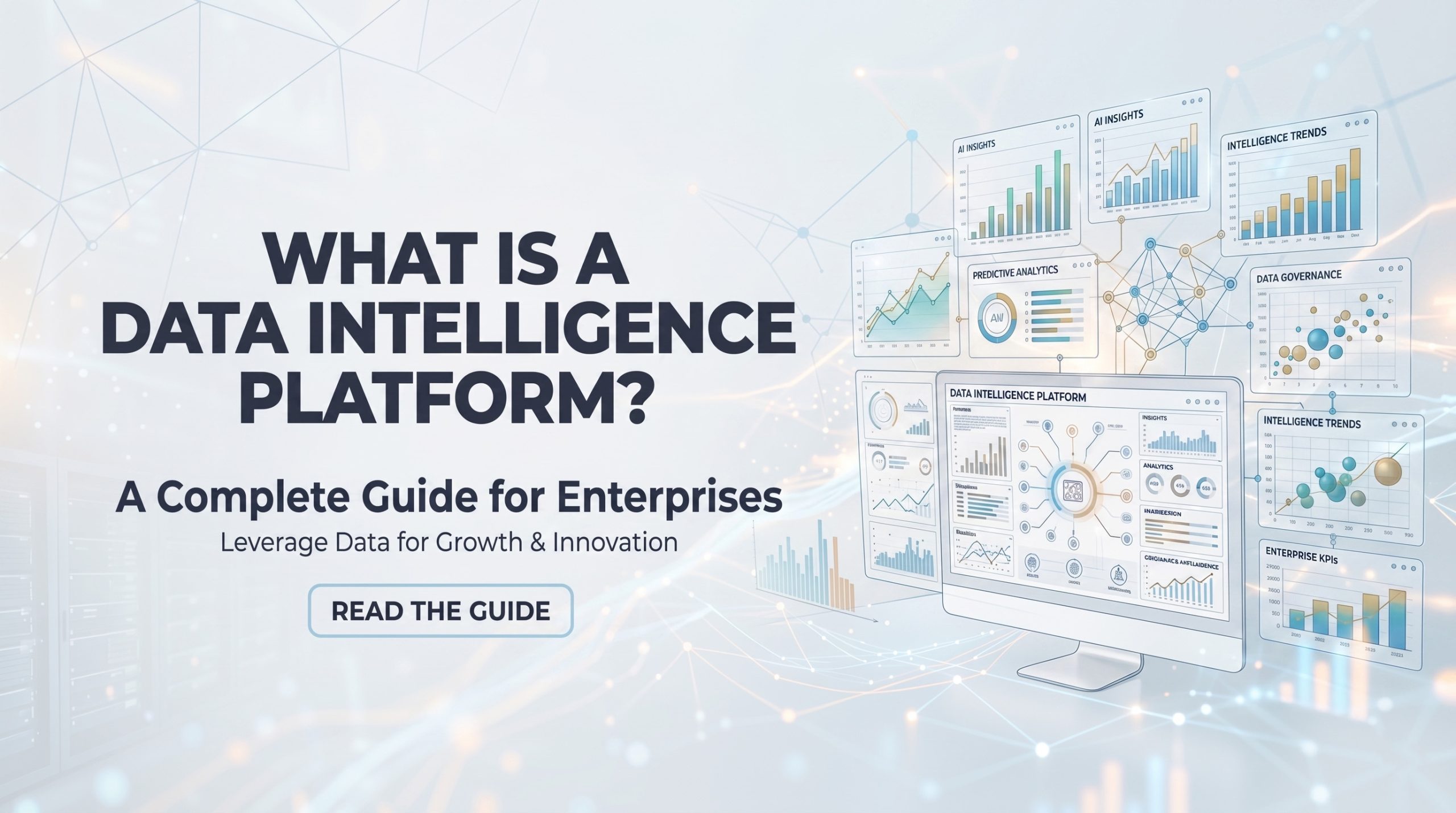
A data intelligence platform is an integrated system that uses AI and machine learning to connect, understand, and use business data. It turns raw data into useful, actionable insights. Instead of just storing data, it interprets it in context. Data intelligence platforms are very different from older solutions. Data lakes hold large amounts of raw, unprocessed data, while data warehouses are designed to store structured data for reporting. These systems have business intelligence tools on top of them that show trends, but they need a lot of manual analysis. A data intelligence platform, on the other hand, sits above and across these layers, adding intelligence, governance, and understanding.
The main change is from storing data to understanding it. It connects datasets across the organization and breaks down silos by making a single data environment. It keeps a check on data quality and looks for patterns that people might miss by using AI-driven insights.
Key Features of a Data Intelligence Platform
-
Unified Metadata Management & Data Discovery
At the foundation of a robust data intelligence platform is a strong metadata engine that continually captures technical and business context across systems. This creates a centralized, searchable catalog where users can easily find datasets, reports, and pipelines. Research sponsored by Alteryx shows that data professionals spend up to 30% of their time searching for data. It also found that poor data discovery and cataloging costs U.S. organizations $1.7 million each year for every 100 employees. Data intelligence platforms handle these issues efficiently by enabling quick and easy discovery.
-
End-to-End Data Lineage & Impact Analysis
Data lineage offers a clear view of how data moves from the source to its final consumption. This visibility helps teams trace errors, evaluate risks before implementing changes, and conduct impact analysis. Organizations with robust lineage capabilities see faster issue resolution and fewer pipeline failures, enhancing overall operational reliability.
-
Automated Data Governance & Compliance
The data intelligence platforms are centralized, and governance is enforced by applying access, privacy, and security policies to all systems. Having default compliance controls and features that are compliant with regulations such as GDPR and CCPA mitigates risk. It provides accountability in the form of audit trails and stewardship models. This is essential because regulatory requirements are ever-growing in modern enterprises.
Top 6 Features of a Modern Data Intelligence Platform
-
Data Quality & Observability
Reliable insights depend on high-quality data. These platforms continuously monitor data freshness, accuracy, and consistency, using automated alerts and quality scoring to maintain trust. Research shows poor data quality can cost organizations millions annually, making proactive monitoring essential.
-
AI-Driven Insights & Automation
Embedded AI and machine learning enhance every layer of the platform—from automated data classification and anomaly detection to predictive analytics and natural language search. This reduces manual effort and accelerates time-to-insight, enabling true decision intelligence across the enterprise.
-
Data Integration & Democratization
By unifying structured and unstructured data from multiple sources, these platforms eliminate silos and create a single source of truth. Intuitive, self-service interfaces empower both technical and non-technical users to access and analyze data, fostering a data-driven culture.
Use Cases Across Industries
Data intelligence is the engine of the modern business, as it allows organizations to advance to the stage of smart data into actionable, result-oriented business processes. They use AI, governance, and access to unified data, allowing quicker, more intelligent, and trustworthy decision-making.
-
Retail: Customer Insights and Supply Chain Optimization
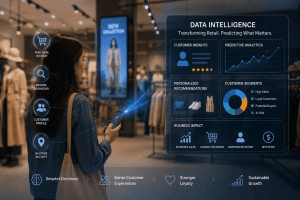
In retail, data intelligence platforms combine customer, inventory, and operational data to provide personalized experiences and supply chain optimization. Companies can study customer trends, change prices on the fly, and coordinate inventory to meet demand to minimize waste. Retailers also use them to enhance the accuracy of their planning, higher conversions, and proactive detection of supply chain disruptions, resulting in improved performance and satisfaction of their customers.
-
Healthcare and Life Sciences
Data intelligence platforms allow healthcare organizations to consolidate clinical, genomic, and patient data with a high level of compliance. This allows quicker drug discovery, better diagnostics, and enhanced patient care. The platforms also provide secure management of sensitive data in federated environments.
-
Customer Analytics and Marketing
Customer churn analysis is a typical application. In the absence of a data intelligence platform, analysts may take days to find credible datasets. But they can quickly find reliable information, retrieve lineage and quality measures, and start modelling in hours with the help of a robust data intelligence platform. This saves much time-to-insight and enhances campaign performance.
-
Data Engineering & Governance
Lineage and observability are used by engineering teams to decrease the time of debugging, and policies and compliance are enforced by governance teams. The result is reduced errors, better data confidence, and enhanced compliance with the regulators, particularly in highly regulated industries.
Know Why Every CEO Needs an AI Data Intelligence Platform?
Benefits of Implementing a Data Intelligence Platform
1. Faster, Smarter Decision-Making
By consolidating data and using AI-based insights, organizations can shift towards real-time and predictive decision-making, as opposed to delayed reporting. The teams no longer use disjointed or outdated data. They can thus respond faster to the changes in the market and the needs of customers.
2. Improved Data Quality and Trust
By having an in-built data lineage, quality monitoring, and governance, users can be assured of quality and reliable data. This eliminates expensive mistakes, and the result is that the decisions made are backed up by reliable information and not speculation.
3. Increased Operational Efficiency
Businesses claim to reduce time-to-insight significantly using data intelligence platforms, enabling data teams to spend the time on high-value activities, as opposed to data preparation. Moreover, there has been an increase in the productivity of governance teams and analytics teams due to streamlined workflows.
4. Enhanced Compliance and Security
A data intelligence platform implements system-wide policies, making sure that all standards, such as GDPR and CCPA, are followed. Automated lineage and audit trails will make the regulatory processes easier and decrease the risk of data breach or non-compliance fines.
5. Better ROI on Data Investments
The benefits of better use of data show financial returns of up to 417% in three years, as per the Forrester Total Economic Impact study. The same study also says that better productivity, higher revenue, and lower costs add up to about $29 million in total business value.
6. Cultural Change towards Data-Driven Organizations
These platforms promote a culture in which decisions are informed and not made on intuition by making data accessible and understandable to all users. Such democratization of data fosters teamwork, creativity, and improvement in the enterprise.
U.S. Market Trends and Real-World Impact of Data Intelligence Platforms
The USA is one of the fastest-growing markets for data intelligence and analytics. This is due to the widespread use of artificial intelligence technology and digital transformation. The U.S. data analytics market is expected to grow at a CAGR of 20.7% and reach $43.5 billion by 2030, according to Grand View Research statistics. This shows how businesses are relying more on advanced data platforms to make decisions. The most recent research report from IMARC also shows that 94% of U.S. businesses have adopted cloud technologies. This makes it easier for them to access data in real time and speeds up the use of unified data intelligence solutions.
Recent Gallup data indicate that more than half of U.S. workers now use AI at work, with 28% using it regularly. This shows how AI-driven data platforms are becoming more important to everyday business operations. Enterprises across multiple industries, including retail, healthcare, and finance, are using these platforms to make customers happier, improve operational efficiency, and make predictions-based decisions.
More businesses in the U.S. are using data intelligence platforms to add AI to their workflows, automate governance, and help with real-time analytics. This change is not only technological; it is also strategic, as companies work toward becoming fully data-driven. These trends all point to the same conclusion: data intelligence platforms are no longer optional; they are essential for innovation and staying ahead of the competition in the U.S. market.
What to Look for in a Data Intelligence Platform?
1. Scalability and Performance
A secure platform is expected to easily expand as the amount of data and user demands increases. Find solutions that enable multi-cloud and hybrid environments that will enable your organization to scale without bottlenecks in performance or expensive re-architecture.
2. Accessibility and Ease of Use
Intuitive interfaces, self-service analytics, and natural language querying provide technical and non-technical users with access to insights in a short time, eliminating the need to rely on specialized teams.
3. AI and Analytics Advanced Functions
Reliable and smart data intelligence systems must incorporate AI and machine learning to automate data classification, anomaly detection, and predictive analysis. These functionalities speed up the decision-making process and open more information on the data.
4. Integration Flexibility
It must integrate seamlessly with other systems, including data warehouses, cloud platforms, and SaaS applications. Support of open standards and an API-first design provides interoperability and avoids vendor lock-in.
5. Security and Compliance
Good governance attributes are a requirement. Make sure that the platform has granular access controls, encryption, data masking, and detailed audit trails to address regulatory requirements, such as GDPR, and protect sensitive data.
6. Vendor Knowledge and Services
Lastly, select a supplier that has a proven track record in the industry and can provide reliable support. The effectiveness of onboarding, documentation, and continuous support can greatly influence the success of the platform, and your organization will be able to get the best out of it.
Top Data Intelligence Platforms Transforming U.S. Enterprises in 2025
The Future of Data Intelligence with Datalens
As enterprises want insights to be easier and faster to access, smart solutions like Datalens let users interact with data through simple, intuitive interfaces. This makes it easier for teams to use complex analytics. It places a strong emphasis on unified data visibility and governance, ensuring that insights are not only quick but also accurate and aligned with the rules.
Connect us for DataLens Demo
In the future, platforms like Datalens will make it even easier to turn data into action by embedding intelligence directly into business processes. This means that decisions can be made in real time with little manual work and the highest level of accuracy. Datalens gives businesses the tools they need to stay flexible, creative, and competitive by making automation better, data discovery smarter, and integration easier.